Several years ago, a new attendee at my church brought to our attention that the chancel platform in the sanctuary was “missing” an American flag. I was not in a leadership position at the time, but I did hear from the man who, on several Sundays, was not shy about sharing his views on the matter. He seemed to believe our church had overlooked a flaw that he was going to remedy. To that end, he donated a flagstand and pole.
When he engaged me on the matter, I suggested that the church is not an American institution and cannot be limited by placing a national flag in the center of worship. The man’s efforts failed, which I believe was a credit to our church. Reading Jesus and John Wayne helps me understand, in retrospect, what the flag-obsessed man was trying to achieve and what drove his passion to reform our church. He was introducing an early version of Christian Nationalism to an otherwise healthy church. It was a hard book to read and even angered me at times. It explains in historic detail how white American evangelism has failed and fractured our country. If just the mention of those terms in the last sentence bothers you, read the book!
The dual nature of the protagonist Harry Haller, as half human and half wolf, is that of an unhappy man who struggles against the meaninglessness of bourgeois German society after World War I. Death is a repeated theme, mostly centering on suicide and murder. The wolf is an image of hedonism and primal instincts. Steppenwolf exists in a world he cannot understand, causing despair and depression. He sees relief in death, but lacks courage.

The book dissolves into magical realism as Haller experiences surreal visions of various German artists, composers, and intellectuals while he goes about the business of assassination and murder. The author, Hermann Hess, believed the book offered a message of transcendence and healing. That message was lost on me amid depictions of lust, casual drug use, and self-indulgence.

The historical fiction story of Nancy Wake, a World War 2 spy for the British, by Ariel Lawhon. Wake started as a journalist with the Hearst newspapers in Paris, married a Frenchman before the war, then escaped after the Nazi’s invaded France. She parachuted back into France as a British SOE operative, code name Helene, but the Gestapo called her The White Mouse, and the Allies heavily decorated her after the war for her extraordinary service.
This captivating and important story is carefully crafted by the author, who uses both first-person and third-person narratives in alternating chapters. The character development is very well done, although the gay Hungarian radio operator who insisted on calling Nancy “ducky” became a distraction. Some characters are beyond contemptible and mostly get what they deserve, except Henri Fiocca’s father, who is despicable and remains unpunished.
A favorite nephew gave me this audiobook as a birthday present, and I feel blessed. BBC Radio released this Dorothy Sayers collection of plays based on the Gospel accounts of the life of Jesus Christ in contemporary language. The plays begin at the Nativity and continue through the Resurrection of Christ, accompanied by musical scores. It was a new way to experience the greatest story ever told, which never gets old.


The list of bad actors on Wall Street that caused the 2008 market crash and then made a profit are identified in The Big Short by Michael Lewis. The tragedy is how few went to jail. The book is a testament to financial reform at a time when nobody is demanding reform. Lewis uses characters to explain obscure terms, such as Credit Default Swaps and Subprime mortgage bonds, which were festering in the market while rating companies gave triple-A ratings to mortgage bonds and other instruments that were headed for financial failure. As an investor myself, it is hard to understand how otherwise intelligent people were so blind to what they were doing.
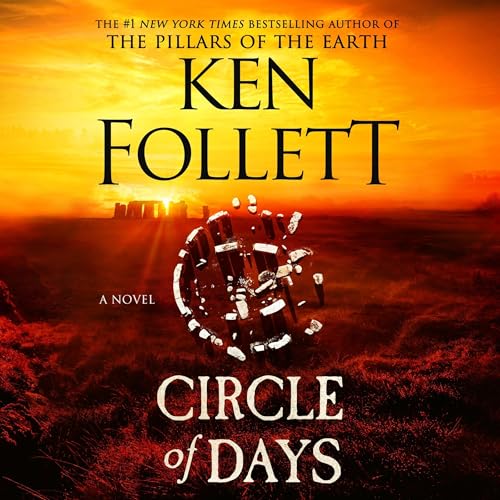
I wish I could say that Ken Follett does not disappoint with Circle of Days, but it simply is not his best work. Follett is one of my favorite authors, and I am glad to have read Circle, but it does not compare with many of his great novels. When I finished the book, I had to ask whether this is about an ancient culture that created Stonehenge or a clever comment on the nature of humans and our modern world.

The delightful part of the book was Follett’s explanation of how and why Stonehenge was created on the “Great Plain” by a primitive culture of farmers, herdsmen, flint miners, wood dwellers, and priestesses, who cooperated to make something bigger than themselves after years of drought and intertribal warfare.

Sources of the River is about David Thompson (1770-1857), a Canadian explorer, surveyor, fur trader, and cartographer, who mapped the Columbia River and most of the northwest territory. He mapped 1.5 million square miles of wilderness, yet he died in Montreal in near obscurity and poverty. A hundred years later, Canada issued a postage stamp in his honor. The book by Jack Nisbet was a worthy book club selection.
DISCLOSURE: Amy Muia is a friend, and likely makes it impossible to provide a completely objective review of A Desert Between Two Seas. The fact that it is the winner of the Flannery O’Connor Award for Short Fiction speaks for itself. Desert is not a travelogue about Baja California, Mexico. Yet the harsh 19th-century setting mirrors the desert in the hearts of the two main characters, who are surrounded by ruined Catholic missions that brought little light to an exploited native people. The book is identified as “a novel in stories” because each chapter is a story unto itself, but Amy managed to link the stories together like pearls on a necklace.

Amy is a fluent Spanish speaker and conducted extensive research. She spent time riding mules in the dust of Baja, collecting stories and absorbing the details of how a forbidding landscape shaped the lives of people in the desert. The book is an excellent read about fascinating and tragic characters who search for a better future in a land that clings to the past.

Robert Langdon, Dante Alighieri, Botticelli, Florence, Venice, secret codes, murder, Italian police, and a young blond doctor, all within 72 hours! If you like fast-moving thrillers, this book may be for you. There is a pattern to Dan Brown’s books, but this one throws us a curve, more than once, which kept it interesting. I started to grow weary as the last 50 pages (2 hours of listening) seemed somewhat unnecessary.
Also Coming Soon . . .