
Coming soon . . .
Reading Life of a Dull Study
Coming soon . . .
Coming soon . . .

Coming soon . . .
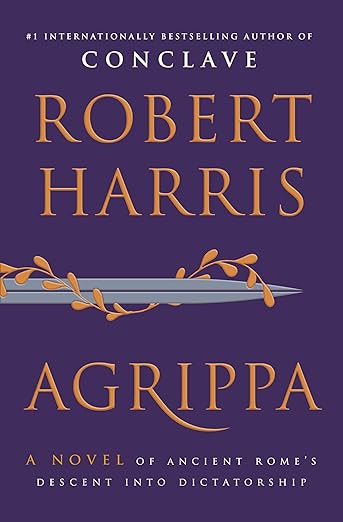
Two things attracted me to Agrippa: the title and the author, Robert Harris. As a Bible student, I noticed the name Agrippa because members of King Herod’s family used it in early first-century Judea. The name means “mother killer” because Agrippa’s mother died during childbirth. The book is historical fiction, and it’s among the best works on Roman history I’ve read.
Marcus Vipsanius Agrippa became boyhood friends with Octavian, who
later became Augustus, Roman Emperor. The book is written in the first person, allowing Harris to create an expansive description not only of Agrippa’s fascinating life, but also of how the Roman Republic became an Empire during the transition from Julius Caesar to Augustus. We learn of Agrippa’s emotional distance and pain as Augustus becomes both dependent on Agrippa and then takes credit for his leadership and engineering accomplishments. The Audible version included an interview with the author that was a great way to end the book.
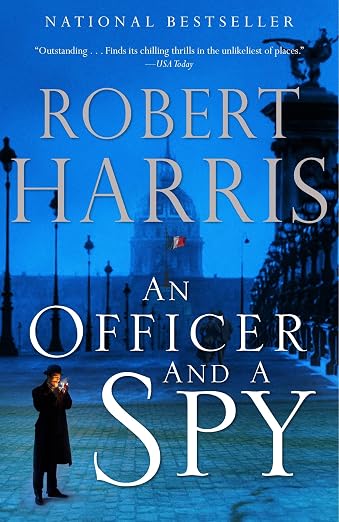
The Dreyfus Affair falls under the category of “the cover-up is worse than the crime,” even in the 19th-century French Army, which Robert Harris has masterfully captured in An Officer and A Spy. The story is told in first-person narrative by French Army officer Colonel Georges Picquart, a soldier who put duty and integrity ahead of convenience and his personal reputation, while serving as chief of military counter-intelligence for the French War Ministry.
Alfred Dreyfus was a French Army Captain, a Jew, serving as an artillery officer who fell victim to a military judicial conspiracy accusing him of being a German spy.
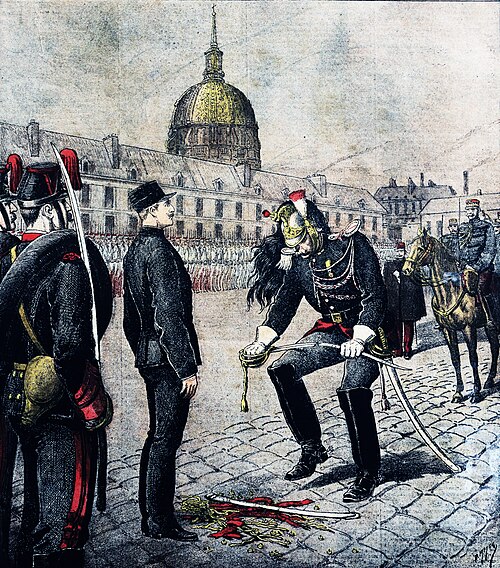
In pre-WWI France, there existed a culture of antisemitism that contributed to the push to convict an innocent man and ignore the evidence against the actual French officer who was a spy. Dreyfus was convicted at court-martial, formally degraded, and sentenced to life imprisonment on Devil’s Island in French Guiana. Ultimately, Dreyfus is pardoned and restored to Army service, thanks in large part to Colonel Picquart, who relentlessly pursued the truth. Justice is served after a regrettable delay, which is another way of saying that justice delayed is justice denied.
The Dreyfus Affair occurred during the French Third Republic (1870-1940), a period following the Franco-Prussian War and ending with WWI. Germany was rightly viewed as an aggressor nation with superior military strength. The thought of any French officer giving military information to the Germans was repugnant to the Army and the French government. This fact, together with open discrimination of Jews, contributed to hysteria surrounding the arrest and trial of a French officer accused of spying for Germany.
Harris has created a well-researched account of a sad time in French military history and added just enough character development for the reader to care about the people involved. I very much enjoyed reading this book. A final thought about the book title: I believe the officer and spy refers to Colonel Picquart, not Alford Dreyfus, who was an officer but never a spy.
The life of British author Jeffery Archer is almost as fascinating as his novels. He was a Member of Parliament, involved in scandals, convicted of fraud and perjury (or both) and served time in prison. Despite all that he was appointed a life peer by the Queen as Baron Archer of Weston-super-Mare. See Jeffrey Archer – Wikipedia. I don’t recall the first book I read, but Nothing Ventured of the William Warwick Series is a likely candidate. Most recently I read Traitors Gate (also William Warwick Series) aboard a cruise ship headed west and finished it in three days; a page-turner. I completed The Clifton Chronicles Series a few years past and became an Archer fan.
Archer has written over 40 novels, published in 47 languages and sold over 300 million books and is still writing. His books are known for their fast pace, attention to details and fascinating plots. He incorporates British history into his novels which adds depth to his work without getting the reader lost on an unwelcomed journey.
Calling Traitors Gate a page-turner is an
Traitors Gate was a page-turner experience for me. The book was in the ship library on our cruise to Hawaii from Vancouver, so I had time to read this Jeffery Archer novel, which is from his William Warwick Series. Archer, a former Member of Parliment introducers readers to British history which adds depth to his work. Traiters is a story within a story about the theft of the Crown Jewels in London.
The story is presented as Archer deftly covers the only acutal (ultimately unsucessful) theft of the Crown Jewels in 1671 from the Tower of London by Colonel Thomas Blood.
Of course our protagonist, Inspector William Warwick of Scottland Yards, foils the plans of the master thief and arch antagonist, Miles Faulkner, who is behind the well planned attempt to steal not only the Crown Jewels, but also the reputation of Warwick and Scottland Yard.
The Back Bedroom unfortunately is not fiction, but a story of events in my hometown during the years I was living in Spokane, going to Gonzaga Law School. Most of what happened occurred in Yakima, Washington in the mid to late 1970s. Gregg Olsen has captured the tragic events in a documentary form based on research and added his own suppositions to make the book readable.
The book is not exactly a page-turner, but it is a stomach turner because of the horrible events that occurred and are described. I cannot recommend the book only because it is so hard to read without feeling pain for the child who was killed and outrage at the people who let it happen.
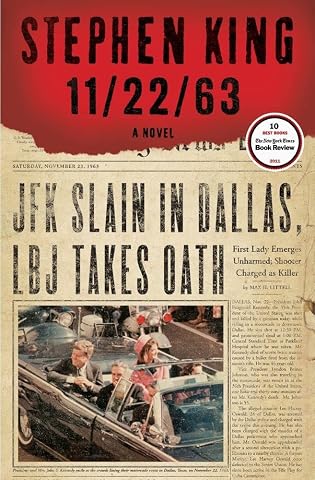
What would you do if you could time travel and change a historical event? It may depend on your generation. A baby boomer might reset “the day the music died” per American Pie by making sure the airplane carrying Buddy Holly and friends in 1959 never leaves Mason City, Iowa. A younger person might pull the World Trade Center fire alarms in NYC on the morning of September 21, 2001, or intervene in the Sandy Hook Elementary School mass killing in 2012. In Stephen King’s novel, 11/22/63, school teacher Jake Epping travels from Maine in 2011 back to 1960 with the mission of stopping Lee Harvey Oswald from assassinating JFK in Dallas.
Jake does not understand the perils involved or that history resists change. In addition, the “butterfly effect” means a slight change (like a butterfly’s wing) can have an unexpected, larger effect in the future. More importantly, he finds that historical events run on parallel, altered timelines, so the intervener agent (Jake) can go back multiple times to “correct” things he didn’t think about or that went wrong in earlier time travel.
To be sure, there are many entertaining stories in this 849-page novel leading up to Jake killing Lee Harvey Oswald in the Texas School Book Depository on Elm Street in Dallas. I think 11/22/63 is one of King’s best works of science fiction based on historical events. The lesson is that it takes courage to face the future and accept what cannot or should not be changed from the past.
Spoiler Alert: Jake does kill Oswald, saves JFK’s life, then goes back to Maine in 2011 and finds the world is a mess because things did not go well with JFK in his second term.
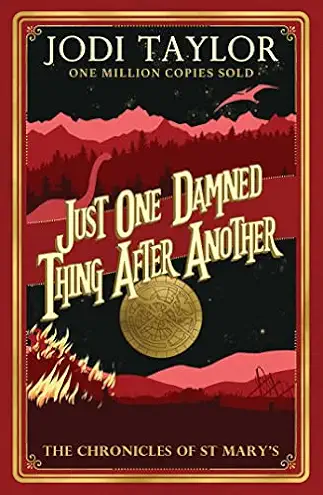
This is my first Jodi Taylor book in The Chronicles of St. Mary’s, which I will remember as a comedic time travel novel about British historians. Just One Damned Thing After Another is a rather generic title that could apply to a number of books, but it does describe a series of adventures by the protagonist, Madeleine Maxwell (Max), who has a sharp and contagious sense of humor even in the worst of circumstances.
The St. Mary’s series appears to have a significant following, and I believe, based on reading only one book, it is because you learn to love Max as she travels from one damn thing to another. There is disagreement among readers about whether the book has an identifiable plot.
I enjoyed the humorous dialogue and lively description of people and historical places. Will I read more of the Chronicles? Stay tuned.