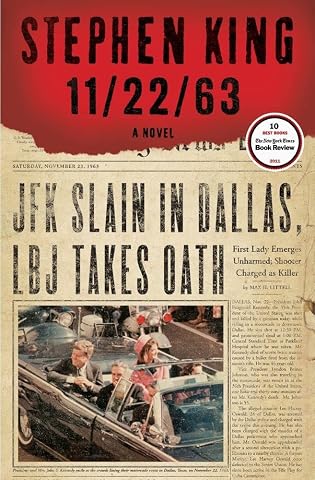
What would you do if you could time travel and change a historical event? It may depend on your generation. A baby boomer might reset “the day the music died” per American Pie by making sure the airplane carrying Buddy Holly and friends in 1959 never leaves Mason City, Iowa. A younger person might pull the World Trade Center fire alarms in NYC on the morning of September 21, 2001, or intervene in the Sandy Hook Elementary School mass killing in 2012. In Stephen King’s novel, 11/22/63, school teacher Jake Epping travels from Maine in 2011 back to 1960 with the mission of stopping Lee Harvey Oswald from assassinating JFK in Dallas.
Jake does not understand the perils involved or that history resists change. In addition, the “butterfly effect” means a slight change (like a butterfly’s wing) can have an unexpected, larger effect in the future. More importantly, he finds that historical events run on parallel, altered timelines, so the intervener agent (Jake) can go back multiple times to “correct” things he didn’t think about or that went wrong in earlier time travel.
To be sure, there are many entertaining stories in this 849-page novel leading up to Jake killing Lee Harvey Oswald in the Texas School Book Depository on Elm Street in Dallas. I think 11/22/63 is one of King’s best works of science fiction based on historical events. The lesson is that it takes courage to face the future and accept what cannot or should not be changed from the past.
Spoiler Alert: Jake does kill Oswald, saves JFK’s life, then goes back to Maine in 2011 and finds the world is a mess because things did not go well with JFK in his second term.