1972-73 was a time of personal growth and learning. My four Madison Hall roommates were all from different areas of the USA. The man on my left is Peter Gormley, a law student at GWU and a University of Notre Dame graduate from upstate New York. We are seen here preparing for semester exams. I regret not having more photographs of this year of my life, but when you are an impoverished college student, color photos are a luxury.
South Korea DMZ
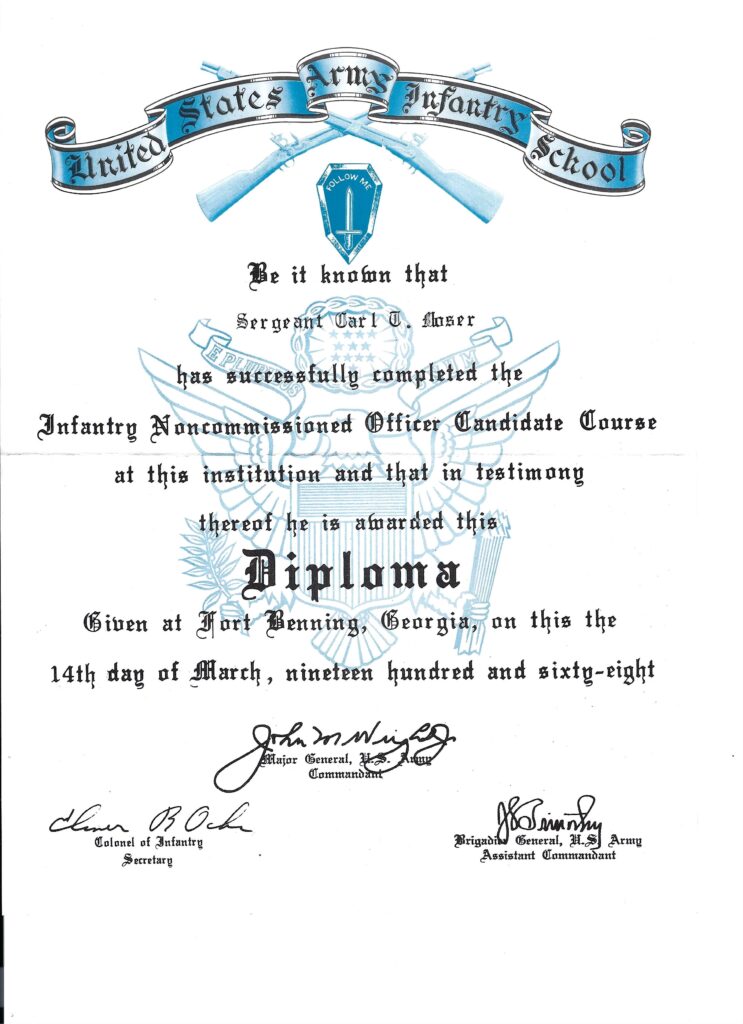
While at the NCO Academy at Fort Benning, I received orders to deploy to Vietnam—to my knowledge, the entire class received orders to Vietnam. The Tet Offensive had escalated the war, and the Army was pouring men and resources into the country. At the same time, North Korea, thinking America was distracted by the war, sent soldiers across the DMZ in an effort to attack the Blue House in Seoul. My orders suddenly changed.
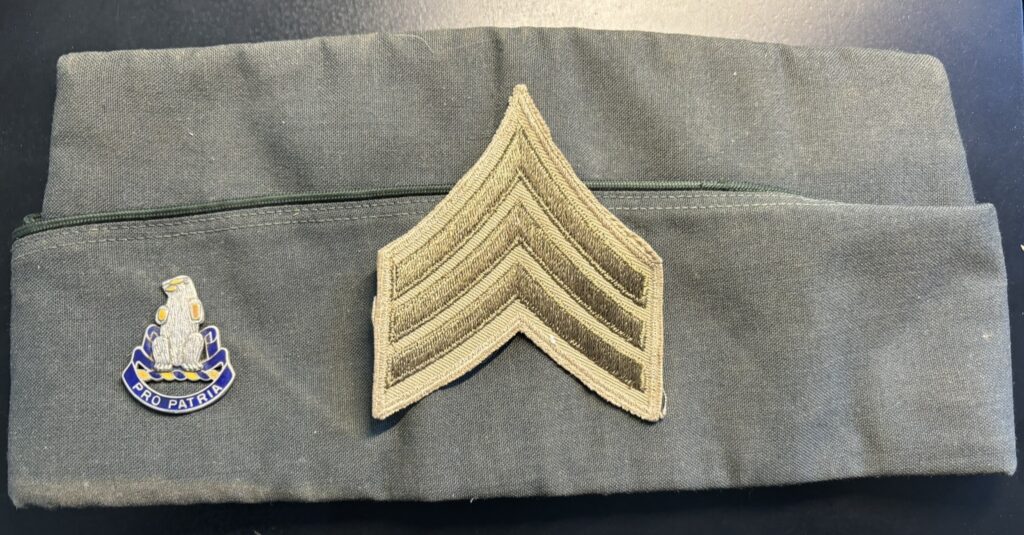
Upon arrival in South Korea, I was stationed with an infantry company at Camp Casey, an Army base about 13 miles south of the DMZ. My unit was the 7th Infantry Division, 1st Battalion, 31st Infantry Regiment. I was part of a large and rather sudden influx of personnel into South Korea, a country on full alert following the incursion by the North Koreans and the deaths of several South Korean and American soldiers.
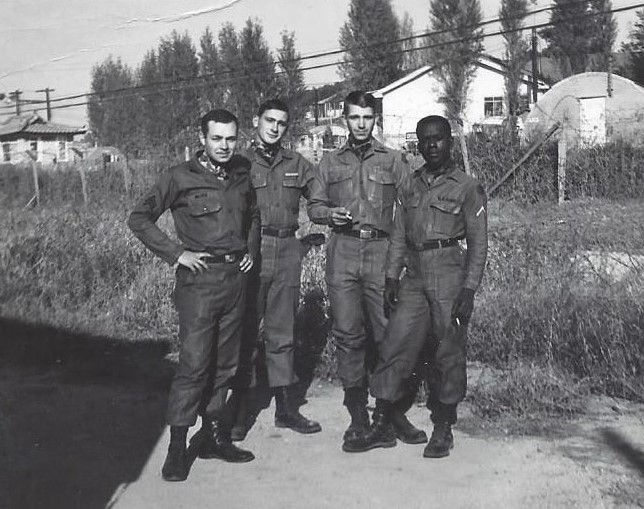
“Land of the Morning Calm” was still very much a country showing the brutal impact of the Korean War. The land was mostly barren, and there was a constant odor in the air, which I will always associate with poverty. I wish I could recall the names of the three soldiers to my left.
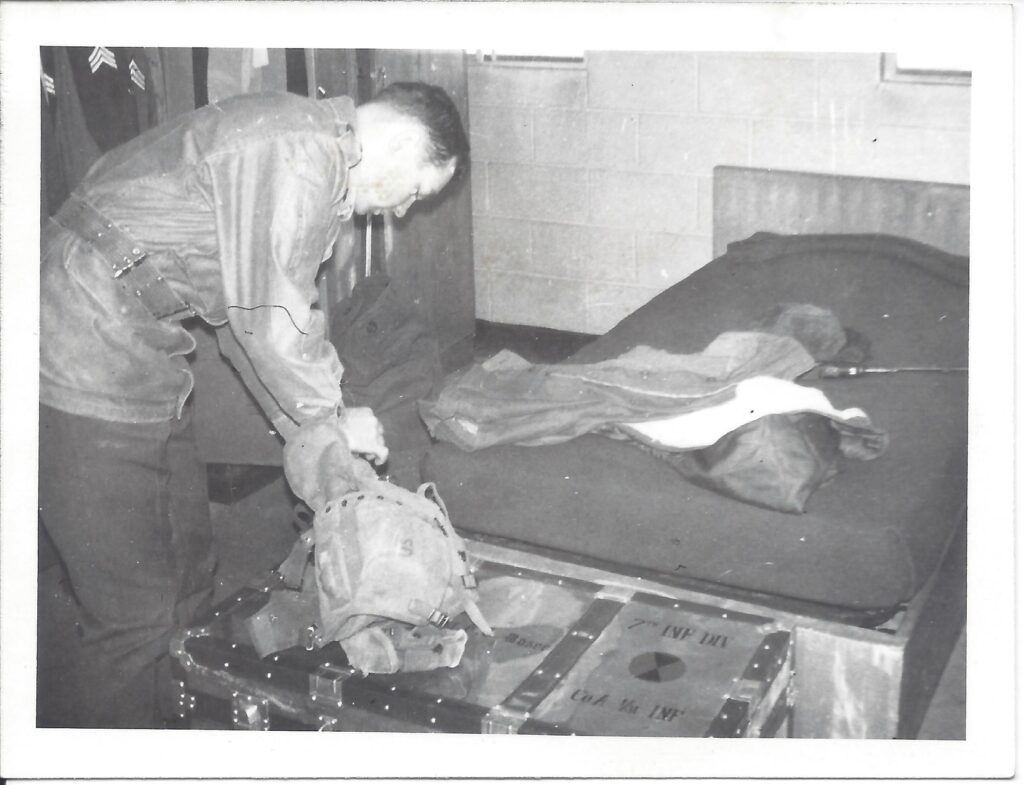
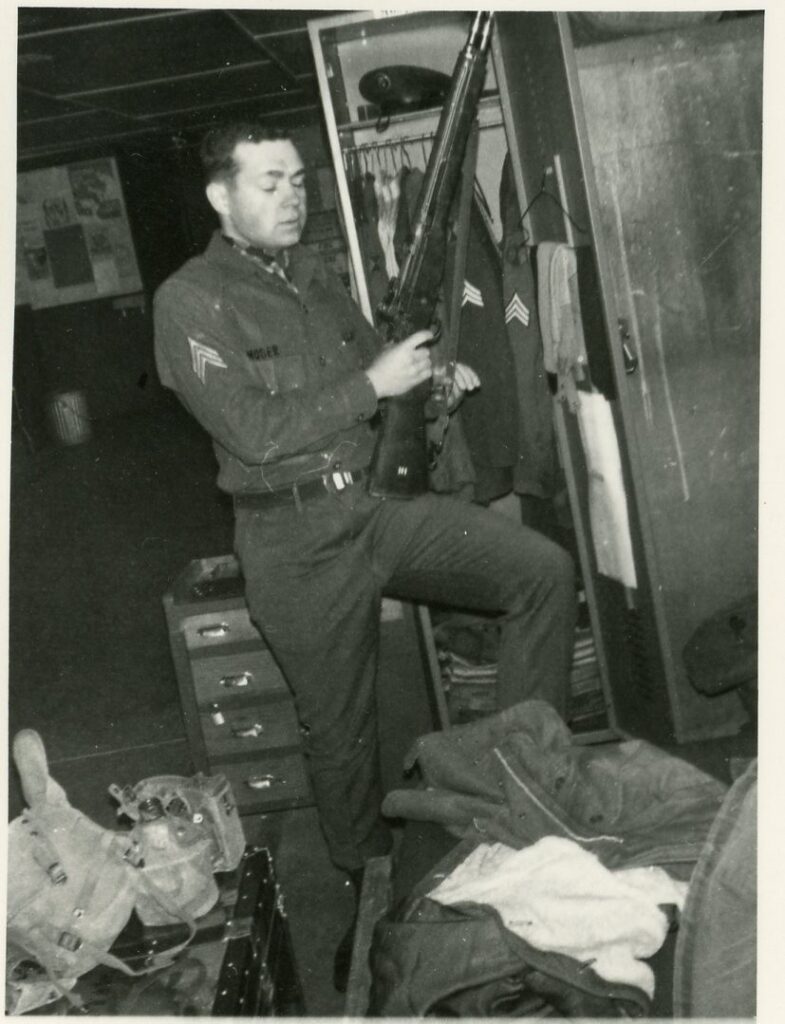
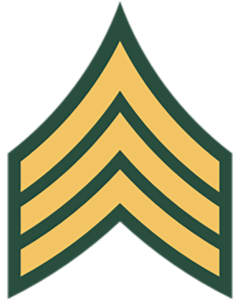
As a buck sergeant (E-5), I was the team leader of an infantry foot patrol squad. We were stationed at Camp Casey, where we trained and prepared to rotate to the DMZ with other units. In this 1969 photo, I was getting ready for either a training exercise or deployment to the DMZ. The winter of ’69 was the coldest I have ever experienced.
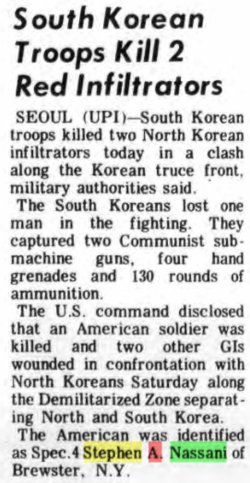
The DMZ was more than standing guard and conducting patrols. Stephen A. Nassani was in my company and part of our team that entered the DMZ for nightly patrols. On October 6, 1968, he was killed by North Korean army infiltrators in a firefight. That night I was along the fence doing guard duty and did not know about the firefight until the next morning when one of our officers walked along the fence to tell each soldier in our company. When we returned to base, I was asked to help collect all his personal effects to be sent to his family.
I wrote home to tell my parents about the conflict and death of a member of my squad, only to learn by return letter that there was no mention of the DMZ firefight on national news. The war in Vietnam dominated the news in those days.
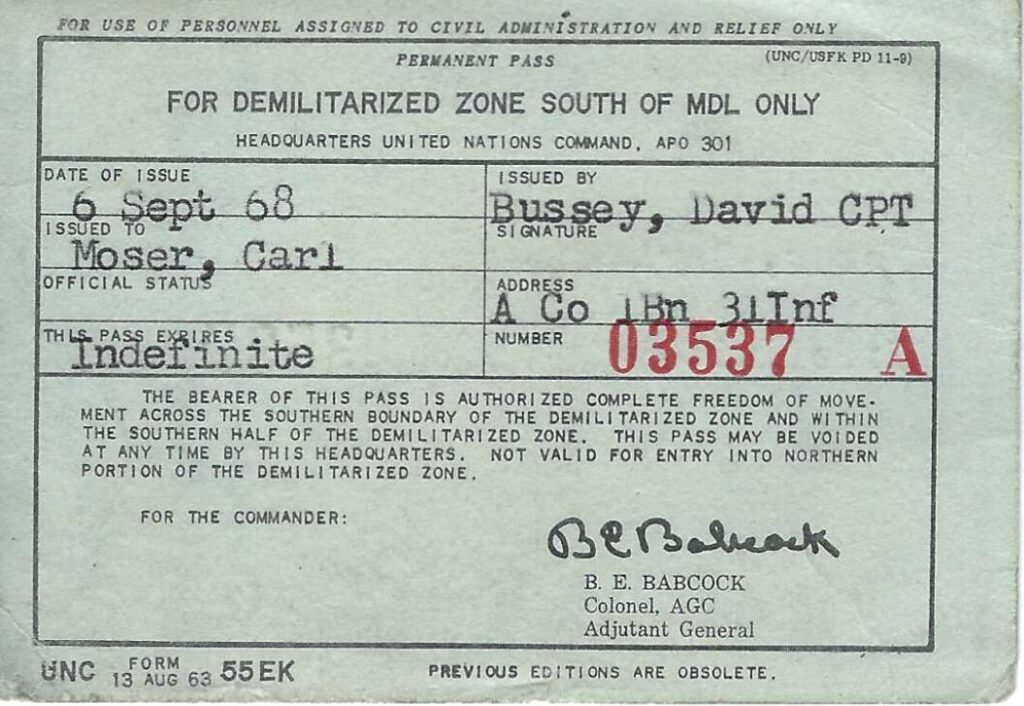
I’m not sure what I was supposed to do with an ID card in the DMZ, but I had one. Notice it says “Headquarters United Nations Command,” and it is only valid south of the Military Demarcation Line, which was an unmarked area of no-man’s land.
In 1968 while at the NCO Academy at Fort Benning, I received orders for Vietnam. To my knowledge, all the men in my class received orders to Vietnam. The Tet Offensive in South Vietnam escalated the war and the Army was pouring men and resources into the country. At the same time, the North Koreans, thinking America was distracted by the war in Vietnam, sent a military unit across the DMV in an effort to attack the Blue House in Soul, South Korea. My orders suddenly changed from Vietnam to South Korea.
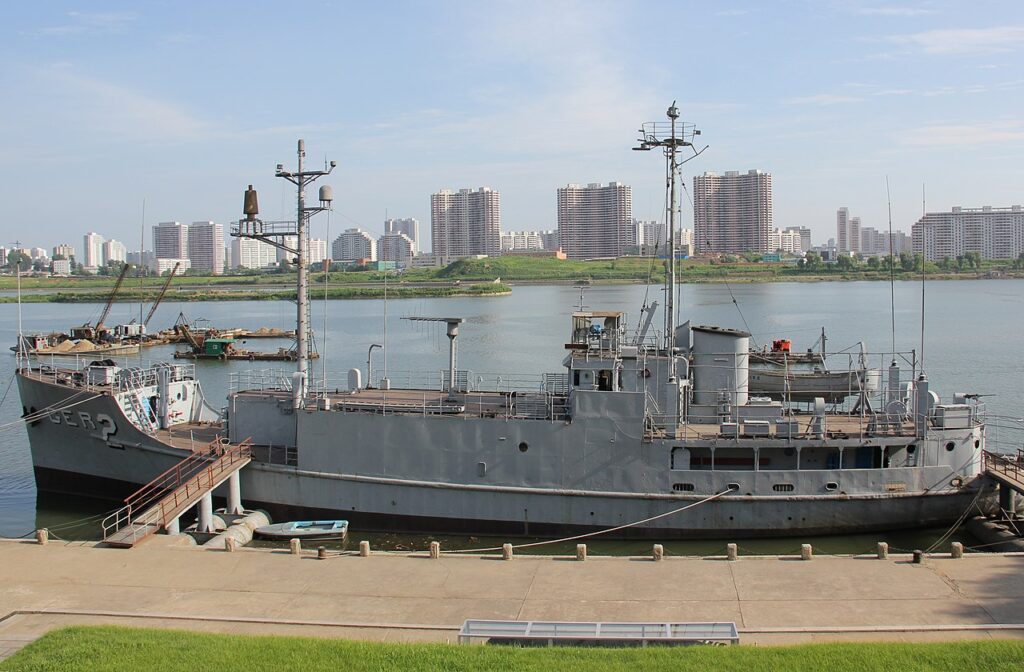
The capture of the USS Pueblo by North Korea, known as the “Pueblo Incident,” was a significant turning point in my young life. About the time I graduated from the NCO Academy, I received revised orders to go to South Korea as part of a military buildup for what many thought was going to be a second war in Korea. The photo below is of the USS Pueblo in North Korea.
NCO Academy
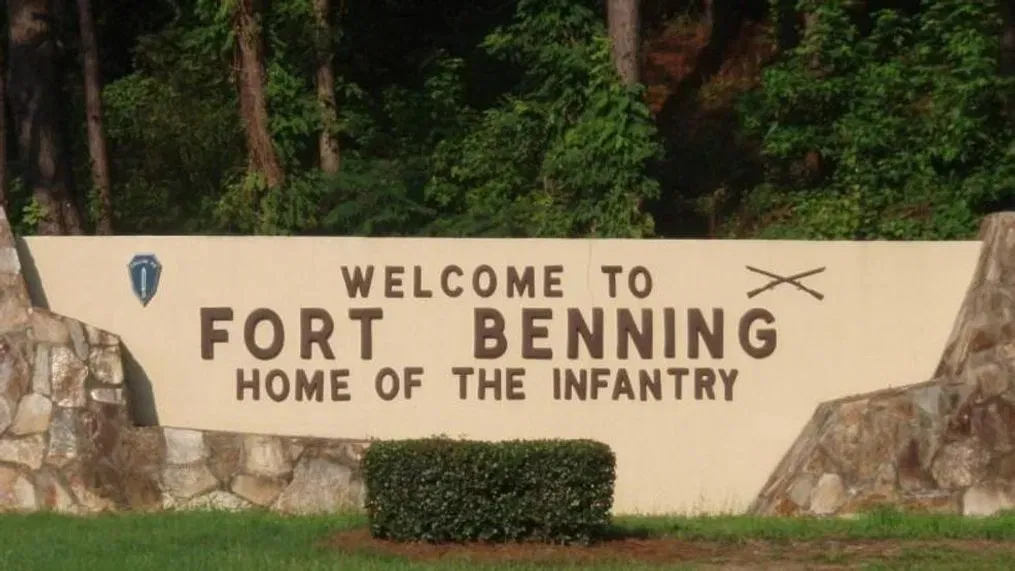
After Advanced Infantry Training (AIT), I was selected to attend the NCO Academy, a several-month training program in Fort Benning, Georgia. The idea was to train men to become leaders in infantry units. Upon graduation, we would be promoted to the rank of Sergeant E-5 and shipped to Vietnam. The training was done by black beret-wearing airborne Rangers stationed at Fort Benning. The training was focused on combat leadership and survival skills. There was one more step in the training process, described below.
After graduating from the NCO Academy, I was assigned as an assistant drill sergeant at a Basic Training unit at Fort Lewis, WA, for one 8-week session. The Drill Instructor was Staff Sergeant Mayor, a Vietnam veteran. I was stationed at Fort Lewis, in April and May 1968 and then shipped to South Korea. I recall that one of the recruits was from Wapato High School, and his older brother was in my class. I do not recall his name.
After an honorable discharge from the Army, I returned home with a new vision and new energy. I was now a veteran in an America that was turning hostile to those of us who served. I know that is hard to believe in today’s culture, where people say to men and women in uniform, “Thank you for your service.” It wasn’t that way so much in Yakima, but in general, veterans were no longer appreciated.
My focus was on getting the education I had rejected in 1966-67 and seeking a new start.
George Washinton Univesity
GWU is a well-established academic center in the heart of the Nation’s Capital, just a few blocks west of the White House. Chartered by an act of Congress in 1821, it today has over 26,000 undergraduate and graduate students. It was my first experience with a major urban liberal arts university with all the diversity and opportunity one might expect in Washington, D.C.
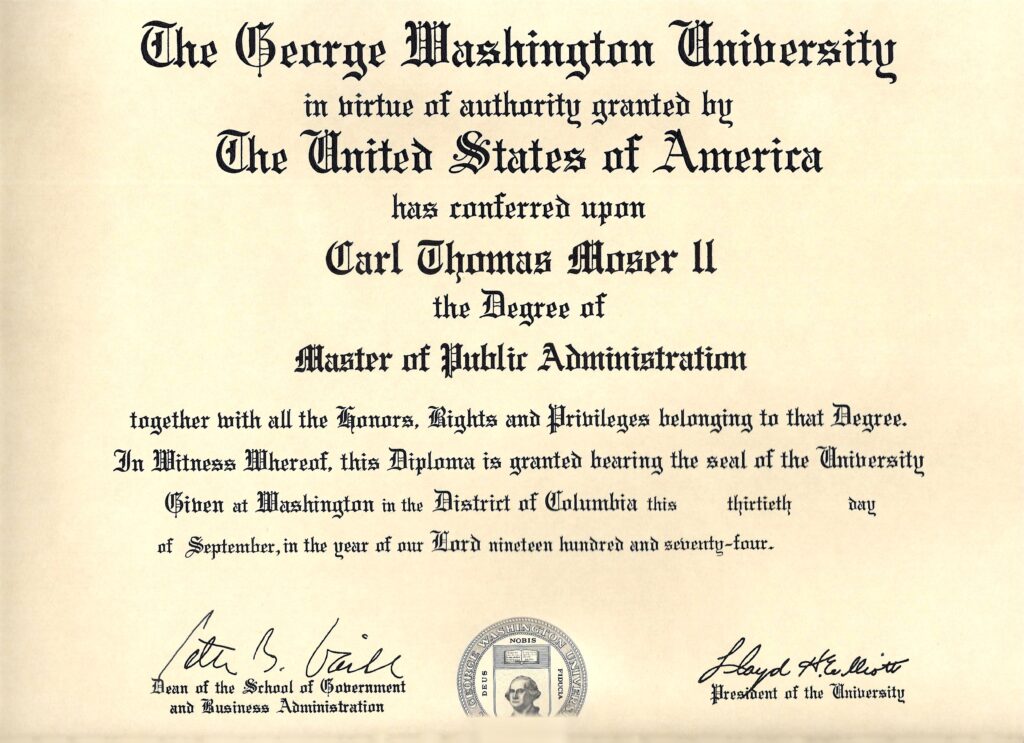
The graduate school MPA program consisted mainly of night classes because most of the students worked for federal government agencies in Washington, D.C., during the day. I lived on campus in a dormitory that housed only graduate, medical, and law school students. It was a one-year program, and I received a Master’s Degree in Public Administration in 1974. The program is now part of the Trachtenberg School of Public Policy and Public Administration at GWU.
The 1972-73 academic year at GWU was a time of growth in my life. I don’t have many photos of those days, but you can click here to see one.
Central Washington University
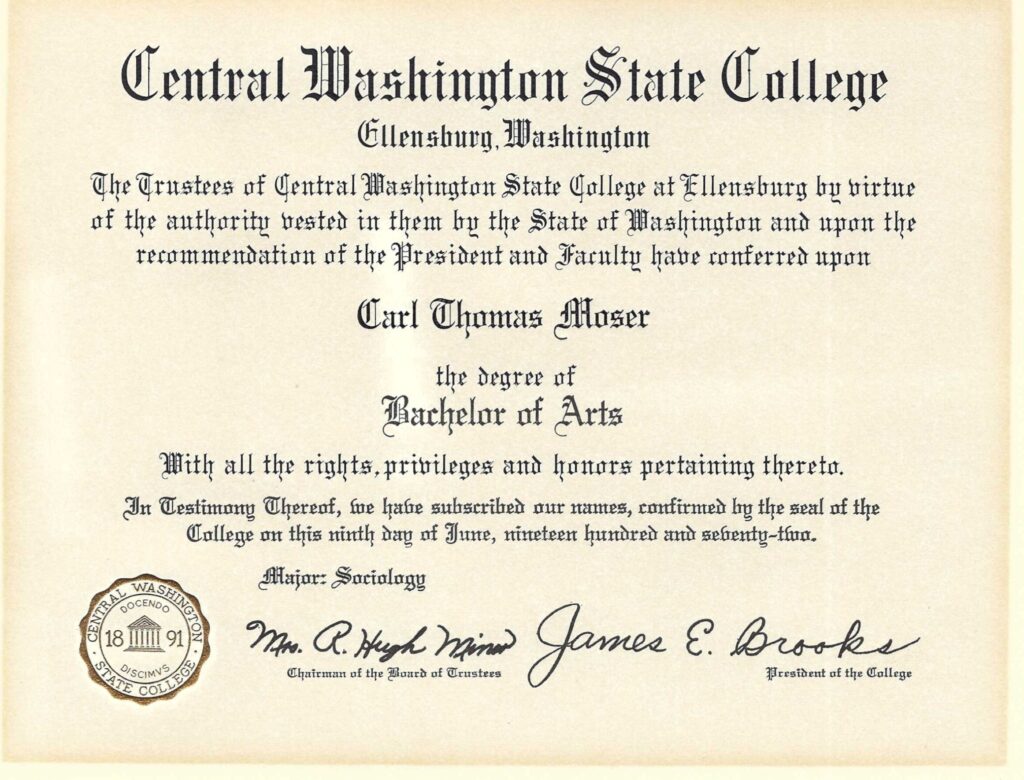
Ellensburg, Washington, was a good place for me in 1970. I lived off campus with my friend Kurt Layman for the first year and then hung around other places until graduation in 1972. I got a BA in Sociology, and my GPA was good enough to earn a scholarship to George Washington University in Washington, D.C.
Yakima Valley College
Founded as Yakima Valley Junior College in 1928, it is located at the intersection of 16th and Lenox Avenues. The students at YVC loved to tell their out-of-town friends and relatives they attended UCLA (University at the Corner of Lenox Avenue). Lenox Avenue was later changed to Nob Hill Boulevard, which, of course, killed the insider joke.
Skagit Valley College
Skagit Valley College is the second oldest community college in the state of Washington. It is located on College Way in Mount Vernon and has two beautiful campuses in Mount Vernon and Oak Harbor. After we moved to Skagit County, I took a Spanish Language evening class at the college. In 2000, Governor Gary Locke appointed me to the SVC Board of Trustees. Governor Christine Gregoire reappointed me to a second term, and I served until 2010.
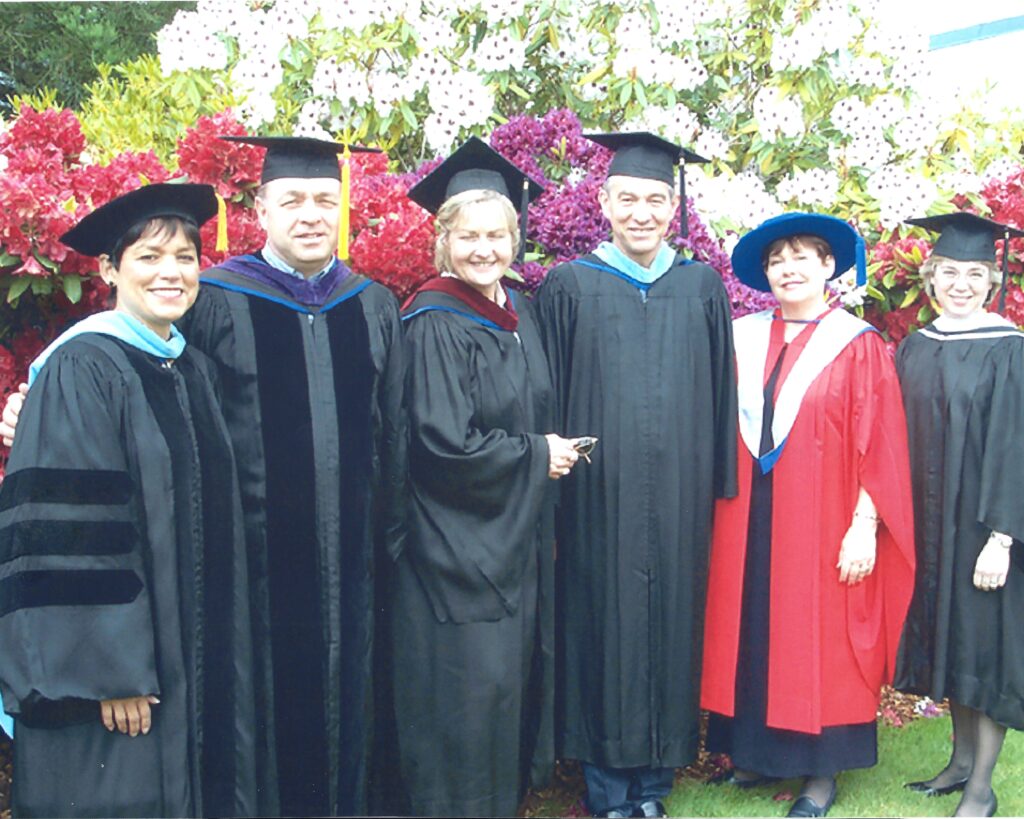
June 2001 SVC Graduation, Board of Trustees: From the left, Lydia Lydesma-Reese, president, Tom, Katie Philbrick, Jess del Bosque, Barbara Anderson, Elizabeth Hancock.
U.S. Army
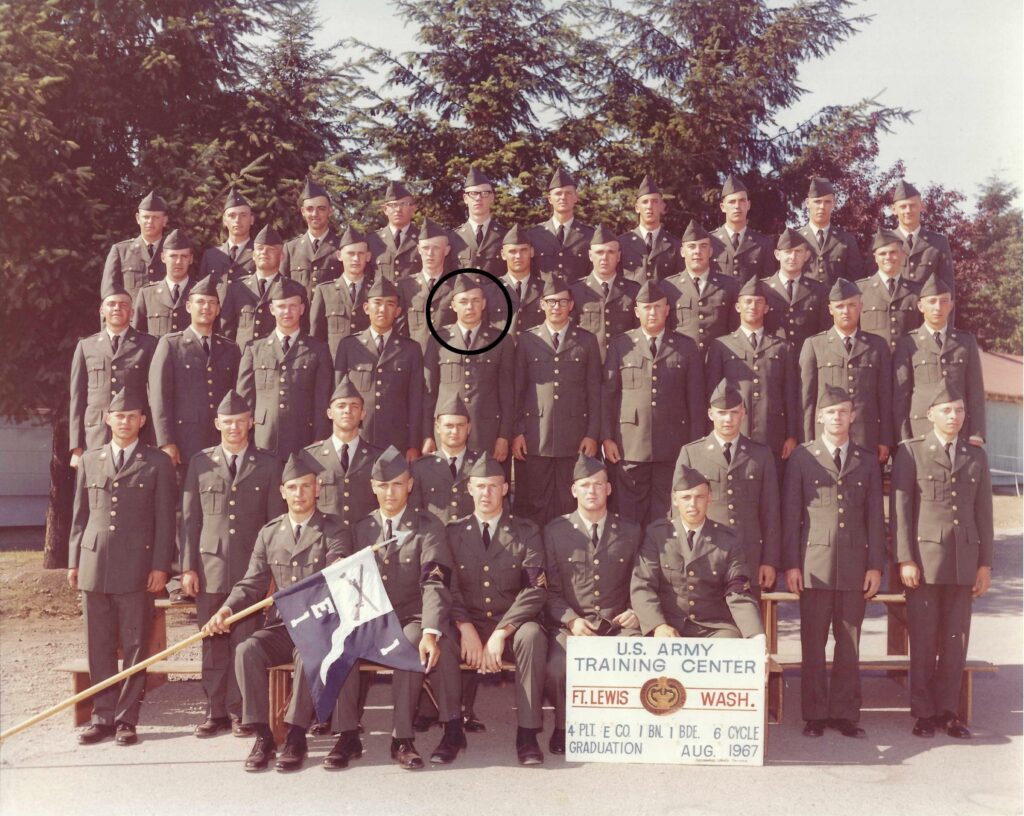
In 1967 I was living at home, 19 years old, not minding my own business, going to YVC, when out of the blue, I got drafted into the U.S. Army. I had flunked out of YVC which ended my draft deferment. I had been going to college during the day and working nights at a can manufacturing company. In retrospect it was the best thing that could happen to me, but my timing was not optimal. The Vietnam War was driving the draft machine, and young men were being ground up. I was shipped to Fout Lewis for basic training, followed by Advance Infantry Training at Fort Polk in Louisiana. Then I got orders.
Company A, 1st Battalion, 31st Infantry Regiment, 7th Infantry Division, 8th Army, Camp Casey, South Korea. Pro Patria