Reading in primary and secondary school was difficult, so I avoided the task. I’m a self-diagnosed dyslexic, even before the term was commonly known and accepted among educators. I read and reread slowly before the text made sense. I was uncomfortable reading aloud, was terrible at spelling, and would omit, transpose, or add letters when reading or writing. My grades were poor, and by the 6th grade, I was correctly diagnosed as having a bad attitude. I recall Mr. Blakley (Parker Heights Grade School) telling me that I was a “smart kid,” but I had to do better and pay attention in class. He reported the same diagnosis to my parents, which must have been hard on them since Dad was a high school teacher. Their firstborn son was a dull study.
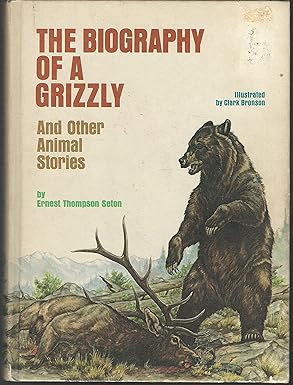
My mother read to me at bedtime when I was about four or five years old. She would read a few pages until I fell asleep. I still recall one of the first books she read to me: Biography of a Grizzly by Ernest Thompson Seton. My love of books was ingrained early, but I had to learn to enjoy the reading experience. She didn’t know I was a better listener than a reader. An interesting aside is that Ernest Thompson Seton was one of the founding pioneers of the Boy Scouts of America.
The Mitigation:
As stated above, my dyslexia diagnosis theory is born of experience. The same can be said of how I mitigated the symptoms, meaning I found a way to live with what ailed me. After my discharge from the Army, I returned to Yakima Valley College and was motivated to succeed because I had seen what failure looked like. The YVC library had study carrel desks where I could concentrate on reading and rereading, ignoring distractions. I am not suggesting that a study carrel is a cure for dyslexia. Would that it were that simple. I was learning to mitigate the disability with concentration and memorization, a skill I learned in DeMolay. It also helped that I was motivated to succeed like never before.
See my reading list starting in 2023 here.
My list of favorite authors is here.